As I try and grapple with AI and what it will do to my children, humanity more broadly and the world, I imagine what it must have been like 100 years ago for people trying to grapple with this new thing called the car. To think how quickly the “system of automobility” has changed our physical, social, economic and industrial landscapes, it’s no wonder people were shocked and worried in the 1920’s and 30’s, and they were just looking at the tip of the iceberg. I’m not sure if I’m writing this to make the impact of the car more accessible to people who have normalised it into a benign part of life, or to see if there are lessons to be learnt from automobility for our approach to artificial intelligence, but I think the parallels are profound and possibly insightful. I am no expert when it comes to AI so bear with my fumbling around that topic.
Your rights versus the rights of the machine – What we give away when we embrace automobility is movement and flexibility, as we hand those rights over to the car. You cannot build a house in my city without a space for a car and a frontage to a road, meanwhile we cannot be sure that we will be able to safely, comfortably or legally walk or cycle to our homes. The car network has taken precedence over the people network. This has happened both through interest groups paving the way as well as the inherent properties of the car, which is always hungry for space, finance, resources, infrastructure, maintenance, expertise, regulation and enforcement. With the insatiability of the car, the provision for it becomes all encompassing, with fear of things getting out of control if we don’t keep on giving to the machine. The leap out of this cycle is hard, and I’m not even sure if places like Amsterdam, where there is more balance in how people travel, are out of the trap, with the normalisation of cars extending beyond the city’s infrastructure and layout.
It seems that AI is making its way into so many parts of our lives and that in a similar way to the car, the ability of AI to operate and expand in the digital space will come at the expense of human rights. Whether it’s our privacy, our independence, or the respect for our values and needs, where AI is focused on efficiency and alignment to prescribed objectives, these may get pushed to the side. We may live our lives and interact with digital devices in ways that are more safe and convenient for AI than for us. Who knows, it may become almost impossible to navigate your own way around the internet once AIs become the dominant user of the net (possibly this post will be read by more bots that humans).
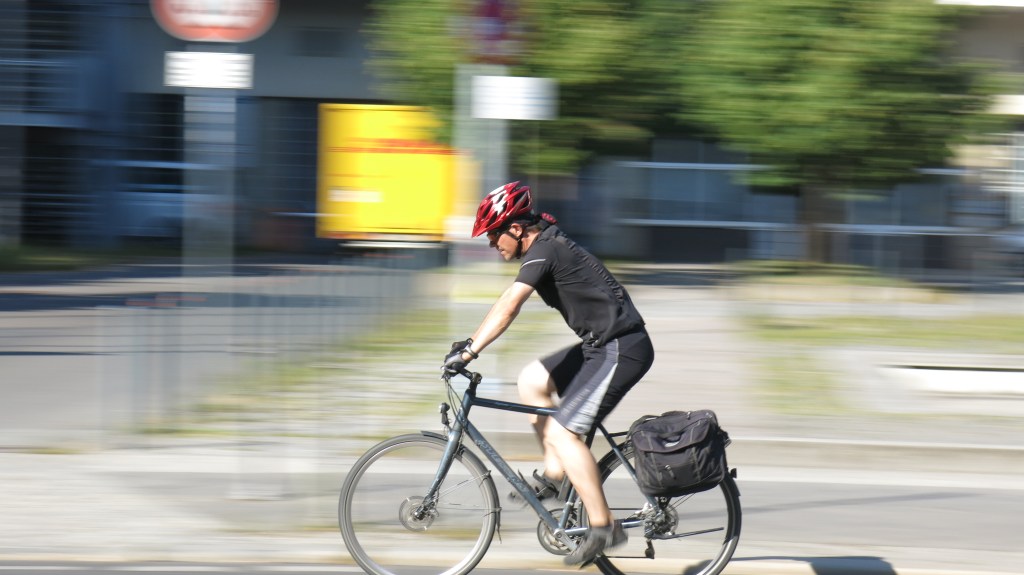
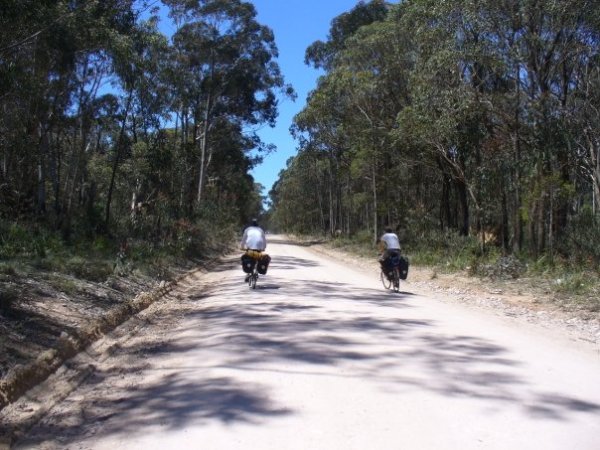
The focus on the destination at the expense of the journey – Working in the field of traffic engineering and transport planning, you become familiar with the idea of lost time, wasted time and the value of time. The focus on building transport systems is to get people to their destinations as quickly as possible – an objective that has developed with the car. The cars main attributes are convenience in being able to get from A to B, potential to go fast without excerpting much effort, and limited interaction with the environment. As my film (A way we go) and others have pointed out, this focus on A and B misses out all the places, the struggle, the life and the learning that can happen along the way. When you are walking, cycling or using public transport, you are emersed in the public sphere and are having a mix of experiences along the way. Indeed, you might not even end up at B if you find yourself diverting from the plan due to your interactions with the places and the people along the way.
Similarly AI can take away some of the fun of researching and creating, including the struggle, the life and the learnings along the way. In the same way the car has made movements all about the destination and the speed and ability to get there, AI is doing that for our ability to think, research and create. When you set out to do a task, struggling to write your thoughts down, find the literature you need to research or just finding that spark of creativity, the journey can lead you to all sorts of places, with possibly hidden rewards and learning along the way. Sure, some people go to the gym to get their physical exercise, and some people will play games that make them think, but in both these cases they are missing something. The gym and the games won’t give you the rich experiences, won’t give you the same type of struggle where you have to adapt as you don’t do everything on your terms. There are definitely less opportunities for learning, and possibly interacting with fellow humans – to share knowledge or space.
The acceptance of existential threats – both the car and AI consume huge amounts of energy. International relations have been shaped by, and wars have been fought to ensure cars can keep being fed by petrol. We have accepted staggering amounts of death as part of the price of using cars. We have accepted the loneliness it leads to and the silos it creates as we only interact with people at the destinations we choose to go to rather than people along the way. We have accepted inhumane ways of seeing the world as it flashes past the driver as a series of signals on big chunks of asphalt. I am inspired and able to think while riding my bike or walking to work – the inspiration is lost if I drive a car. The car makes people slightly less “human”. I suspect AI will continue on with this pursuit.
I don’t doubt that the car and AI have done and can do wonderful things in the right context, but that doesn’t mean the best use of the technology is ubiquitous use. We need to be strategic in how technologies are developed and distributed. This is no easy task when you are up against ambition from interested parties, the framing of problems and the visions developed to spur on the uptake of the technology, and crowds that are increasingly willing to succumb to the temptations of convenience and speed, no matter the cost.
Well that’s my first couple of thoughts. I think there is definitely more to this story. If anyone (hopefully human) with more knowledge of AI wants to think more about this analogy, I’m up for a chat.
I haven’t done a proper reference for this but to understand my influences I recommend reading literature by John Urry and Mimi Sheller, Peter Norton, Cotton Seiler, Ivan Illich, Jan Gehl, Marco Brommelstroet and if you have the time and patience my thesis and my film.









 a way we go